Enterprise grade AI-powered revenue management platform for independent hotels
2023 - 2026 - takeup.ai
Product Context:
TakeUp was an AI-powered revenue management platform for independent hotels, inns, and boutique hotels. It helps operators make better pricing decisions by combining booking data, market signals, forecasting, competitor insights, and automation. TakeUp was a seed venture of a venture studio, whose doors were closed by their sole investor, and that has domino-ed down to all of the ventures, including TakeUp and me in May 2026.
My Contributions:
I acted as a long-term embedded design partner to the founding team, product, engineering, data science, CS, and leadership. My role was to shape the product experience at a strategic and systems level: clarifying ambiguous product problems, defining UX direction, translating complex pricing logic into usable workflows, and raising the quality bar.
I led design across core product areas including rate management, pricing controls, forecasting, reporting, competitor insights, and decision-support tools. Much of the work involved making AI-driven recommendations understandable, trustworthy, and actionable for non-technical hospitality operators.
A key outcome was designing functionality that reduced manual rate overrides by up to 80%, helping customers rely more on automated pricing while keeping control.
I owned product analytics across PostHog, Mixpanel, and Hotjar, connecting user behavior, product friction, and design decisions.
I used AI throughout the design process for research synthesis, UX logic exploration, interface ideation, documentation, QA support, and faster iteration.
I helped establish a shared design system workflow across Figma, frontend code, and AI-assisted prototyping tools to accelerate iteration and reduce design-to-code drift
I worked in a highly async remote environment with fast feedback loops and close engineering collaboration
TakeUp raised $11M Series A during my tenure
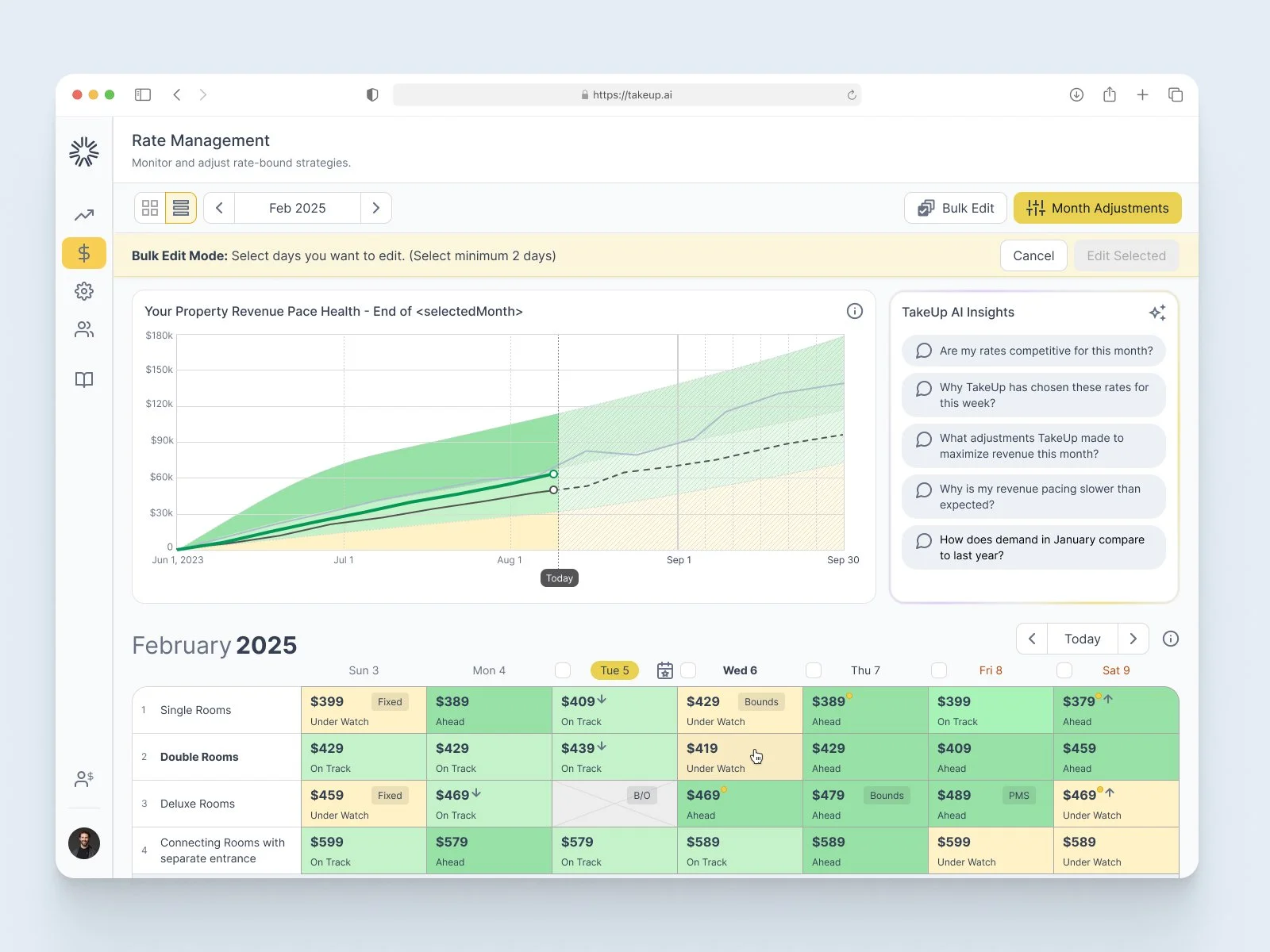
TakeUp dynamically adjusts room rates based on real-time demand. But the real design challenge isn't the algorithm, it's trust. Operators make high-stakes decisions daily, and the system needs to earn a place alongside their judgment, not replace it. The complexity behind every recommendation spans booking patterns, competitor signals, forecasts, and more. Making that legible, and keeping a human meaningfully in the loop, is what drives every design decision.
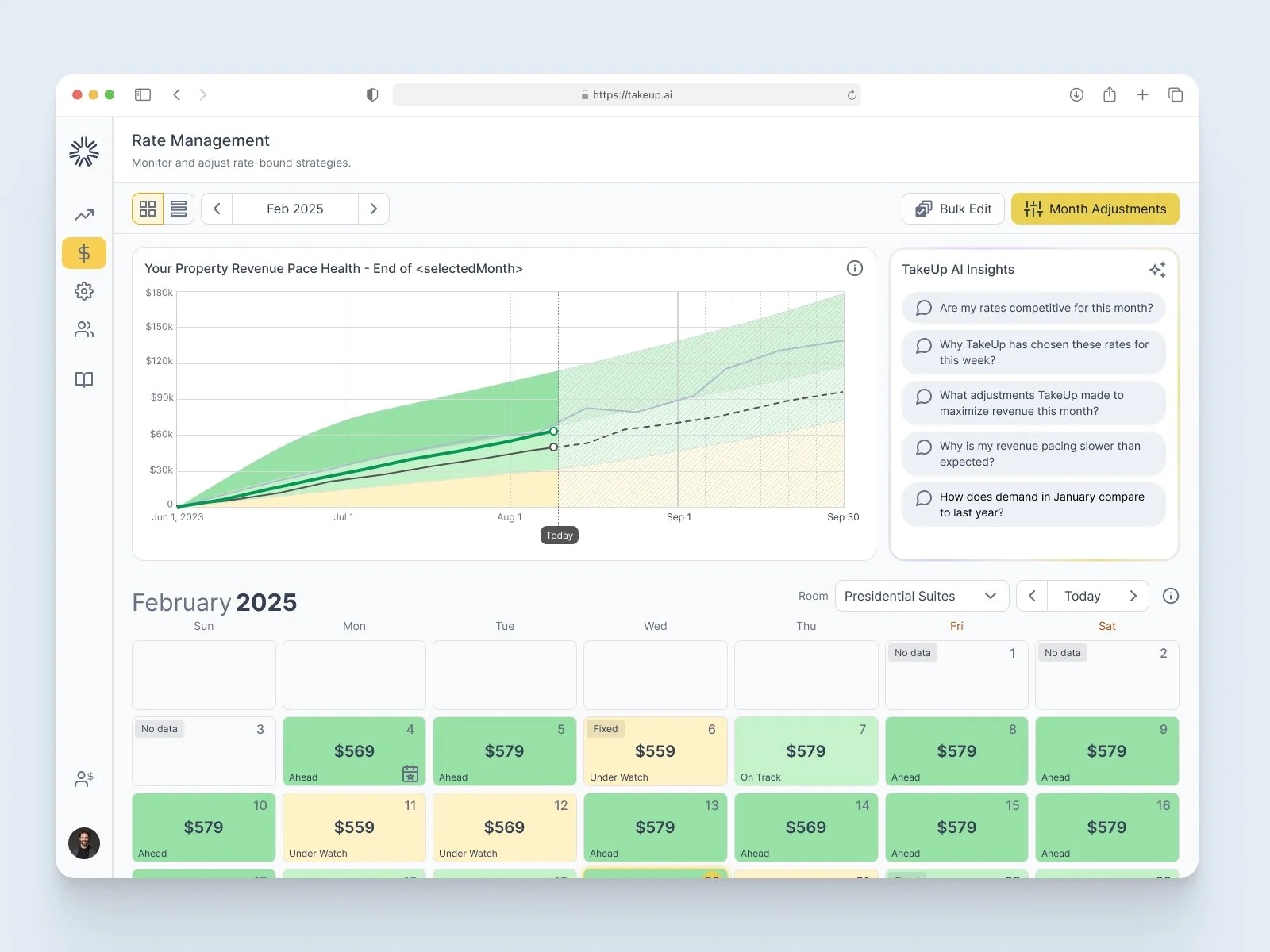
Designing for trust meant stripping away clutter and surfacing only what matters. Every signal in the interface was chosen to build comprehension, not add noise. One of the most important areas of exploration was AI-generated insights and AI collaborative features, figuring out exactly when and how to surface them so they support operator decisions without overwhelming them.
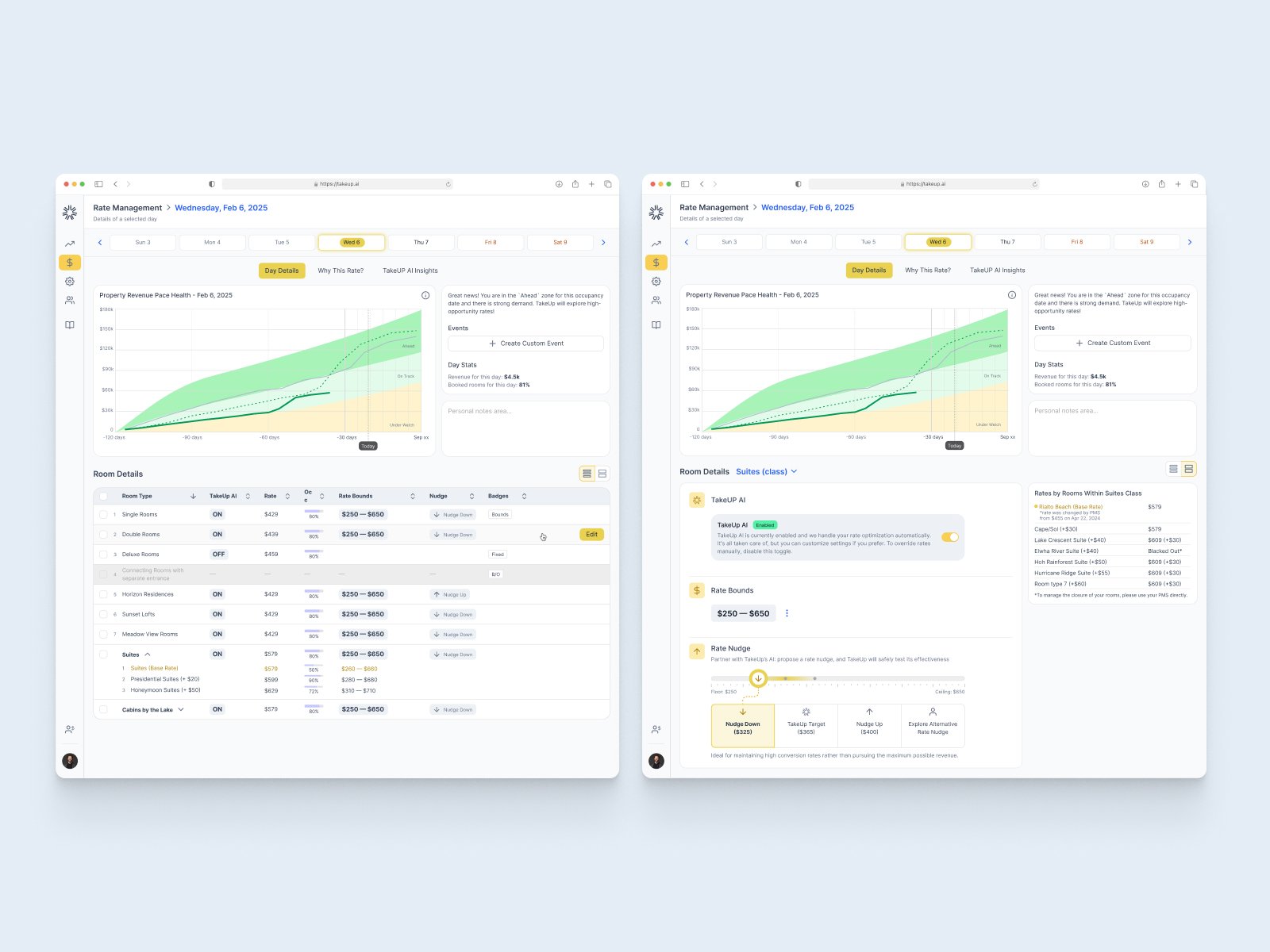
Operators could always go deeper when they needed to. The daily detail view surfaces all relevant information clearly, designed to support both understanding and action. Two views were proposed, a data-heavy table and a simpler form, so users could choose the level of density that works best for them and their properties.
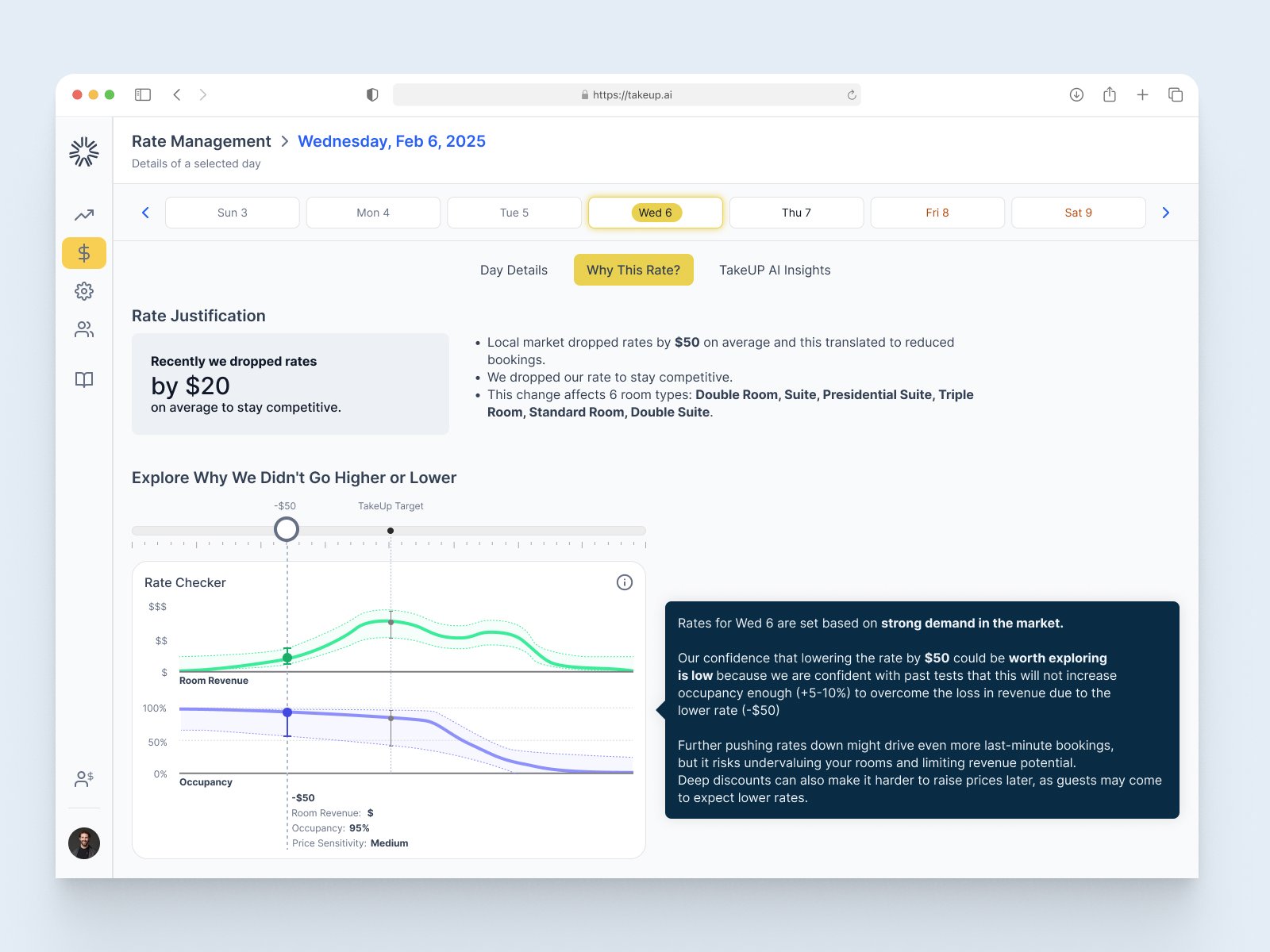
Trust requires transparency. Operators needed to understand not just what the system recommended, but why. A dedicated space gave them a clear view of how rate changes would impact revenue and occupancy, making the logic visible and the decisions theirs. Perhaps the most valuable feature was soft overrides, which reduced manual overrides by 80% by letting the system learn from operator experience rather than fighting against it. The result was a model built on both AI and the hard-won knowledge of the people running the properties.
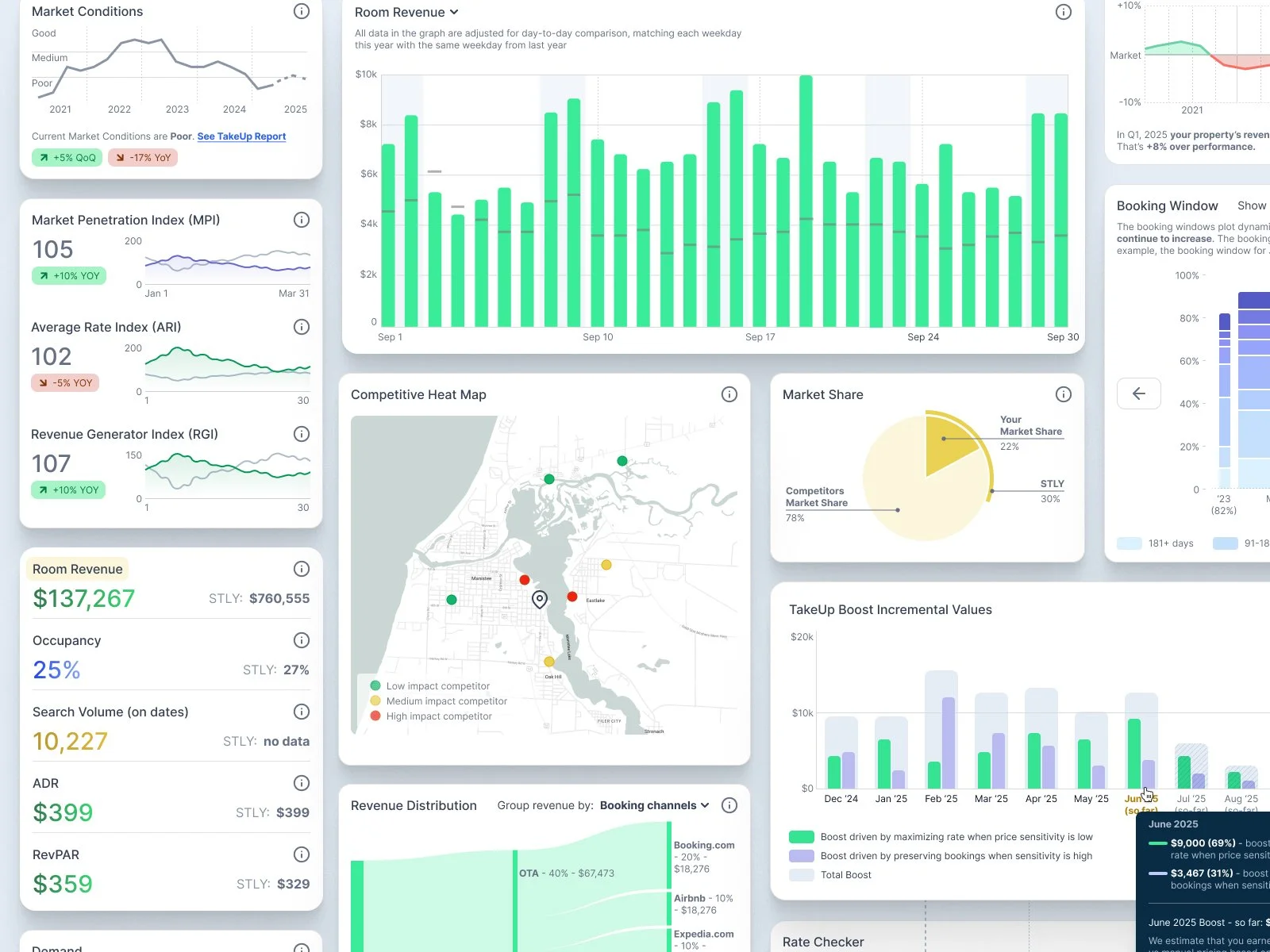
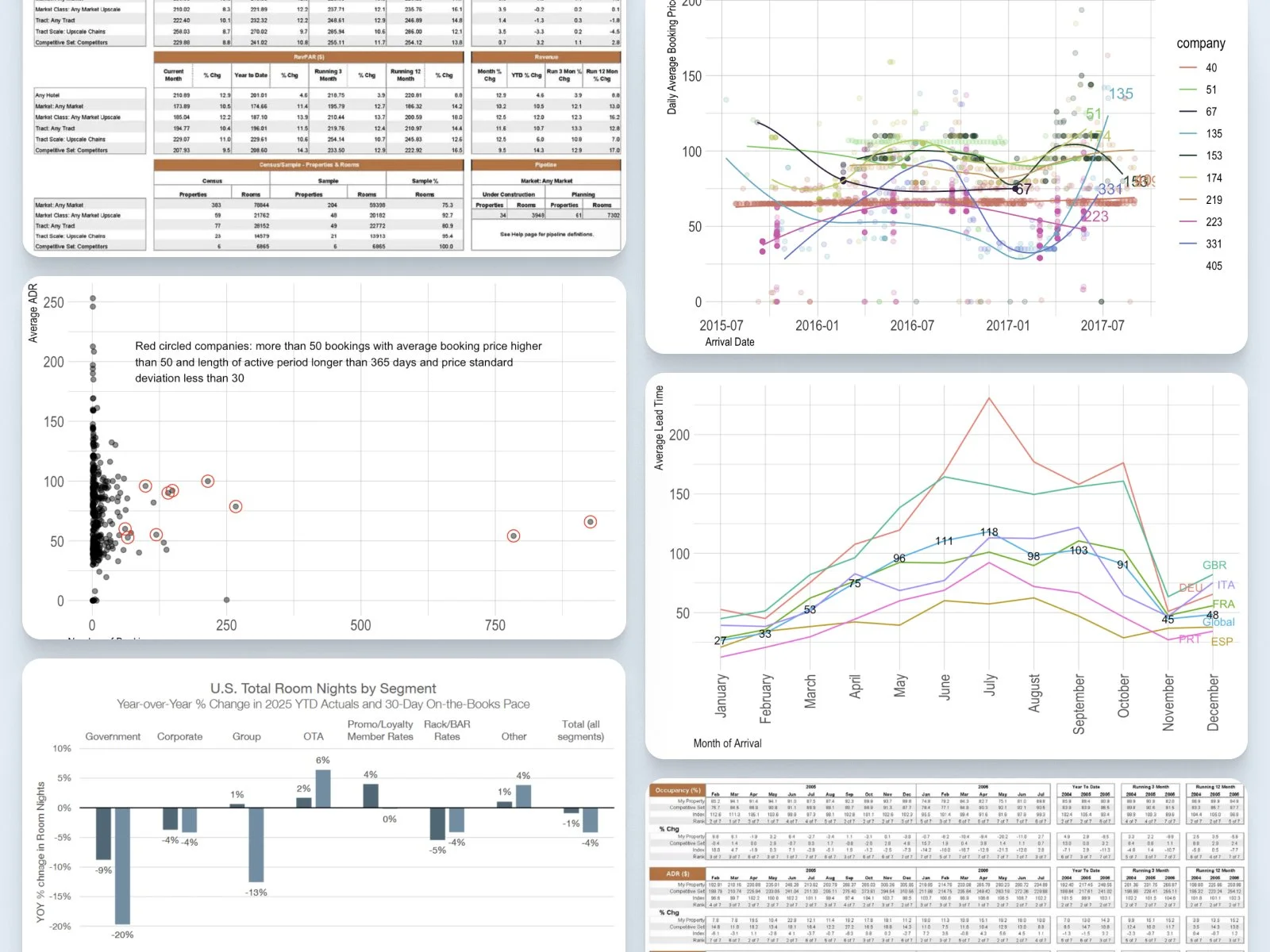
A significant part of my exploration was focused on contextual data visualisations, helping innkeepers understand the environment they operate in rather than just the numbers in front of them. Different metrics and indexes were tested to find what actually built understanding. One strong example was TakeUp Boost, a metric that compared real revenue against a counterfactual, showing operators exactly how much difference using TakeUp had made. Making the value of the system visible was itself a trust-building act.
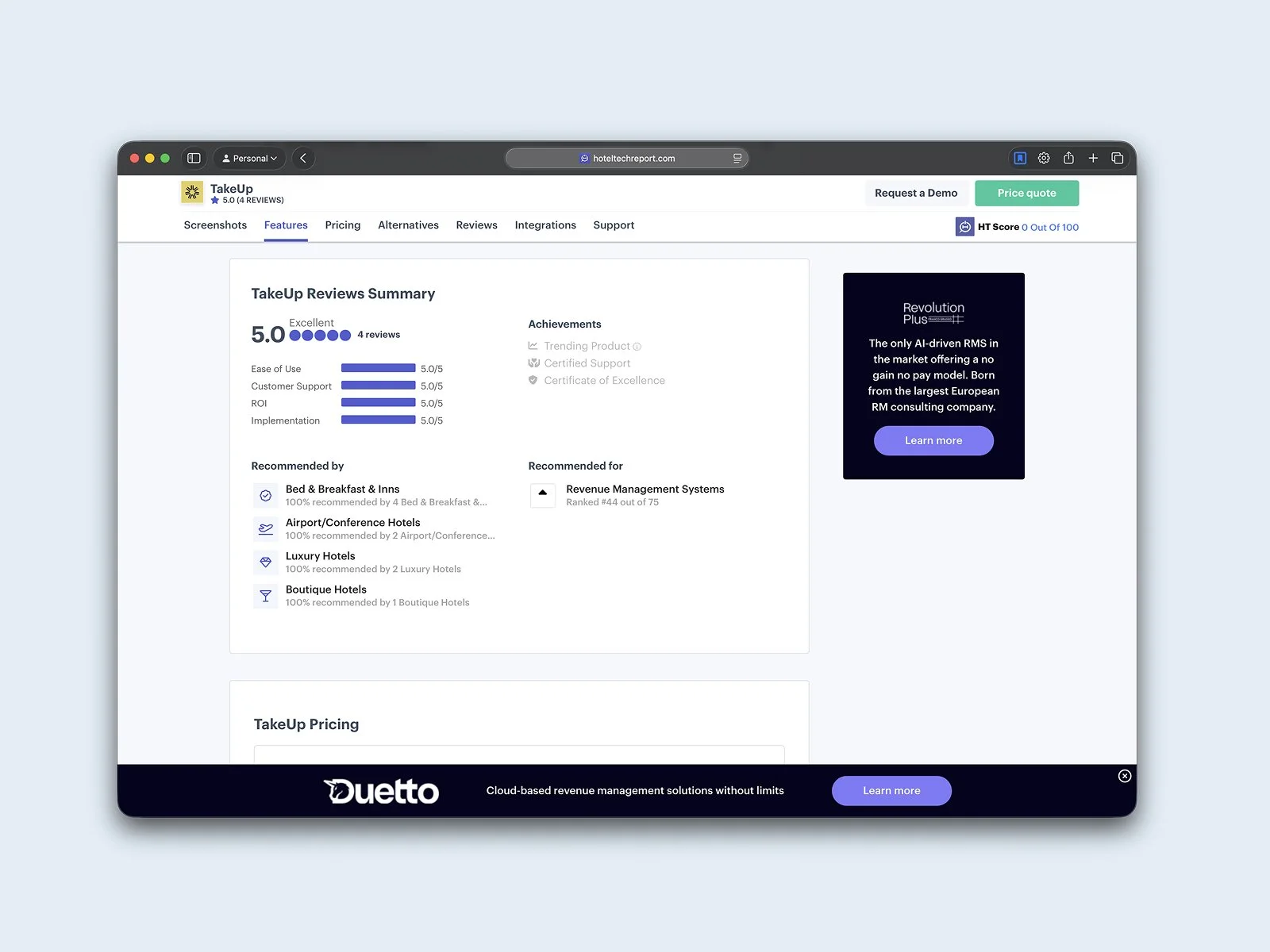
Designing for trust had a measurable outcome. TakeUp scored 5.0 across all categories on Hotel Tech Report, recommended by innkeepers across boutique hotels, B&Bs, luxury properties, and more. Ease of use ranked alongside ROI, which is exactly what you want to see when the goal was making a complex system feel simple and worth trusting.
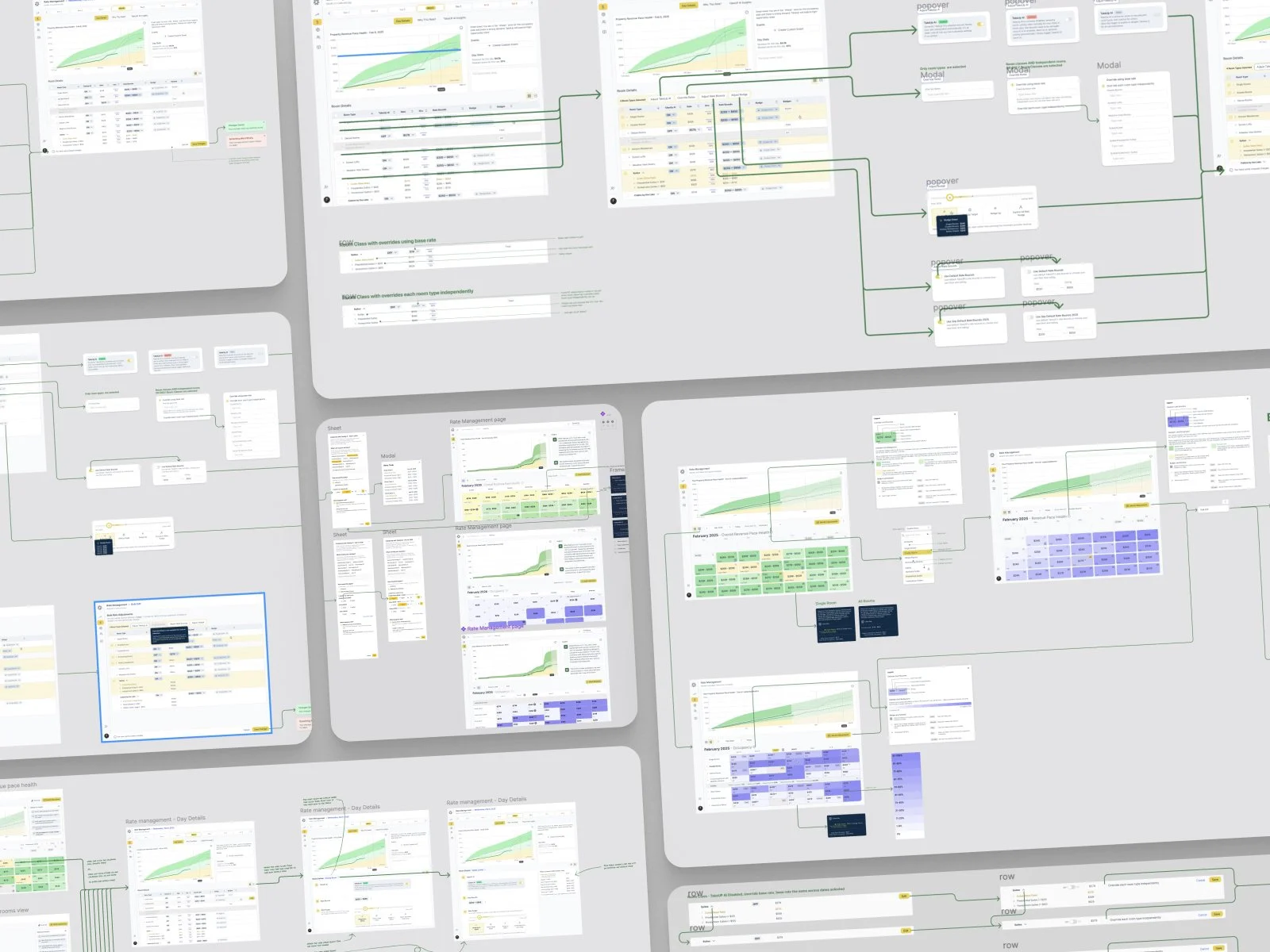
Simplicity on screen required serious work behind it. Flowcharts mapped out every state, edge case, override hierarchy, nudges, and rate bounds, covering both automated behaviour and the moments where operators step in. AI tools and rapid prototyping were part of the process throughout, making it easier to explore ideas quickly and spend more energy on what actually mattered, validating decisions with real users. That rigour behind the scenes is what kept the interface clean and trustworthy in practice.
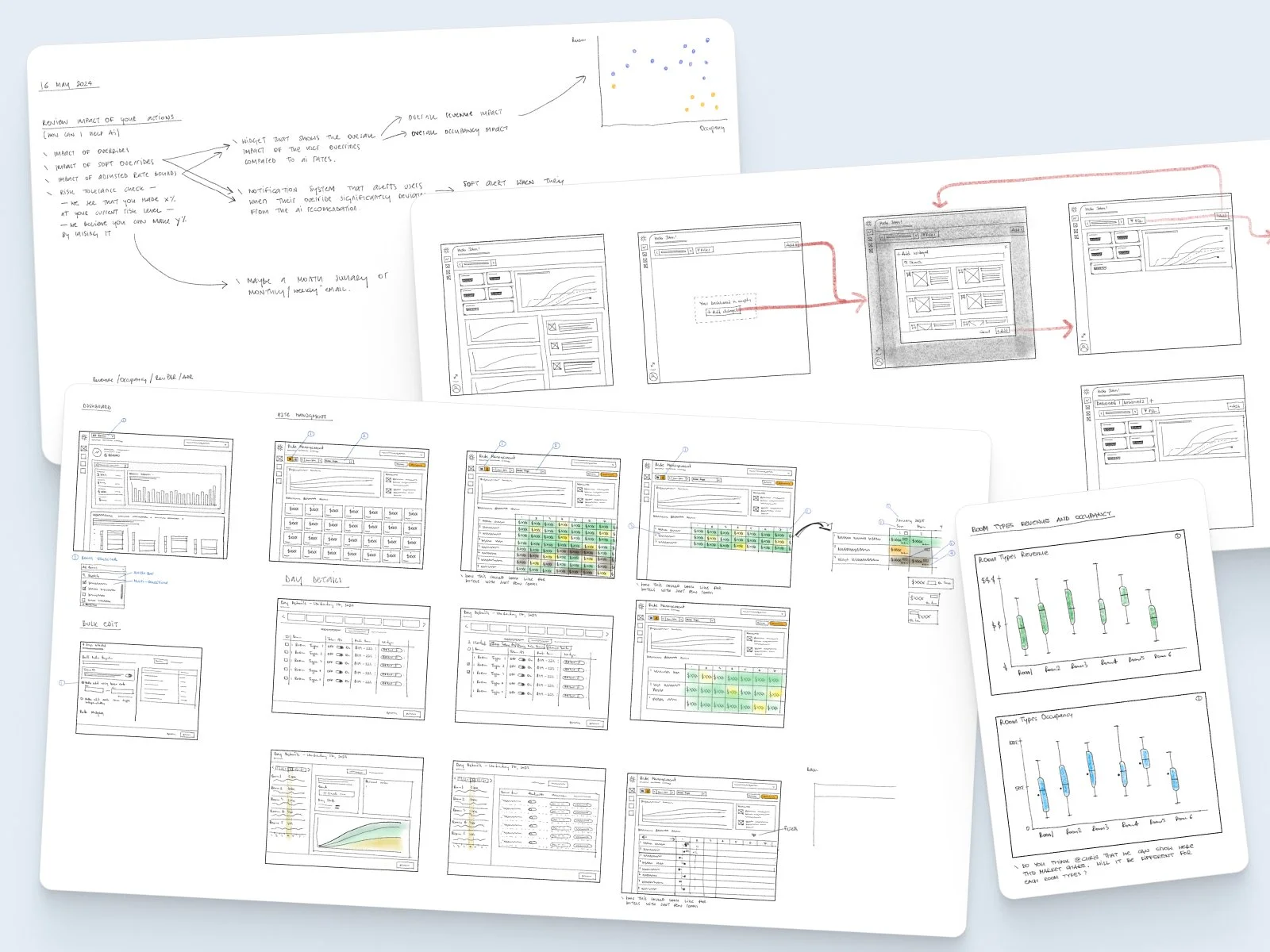
The earliest design work was deliberately rough. Sketches and whiteboard sessions were used to explore breadth quickly, putting multiple directions side by side to find where they broke down. Tradeoffs were made visible early, so decisions could be grounded in reasoning rather than preference. Fast iteration at this stage saved a lot of time later.
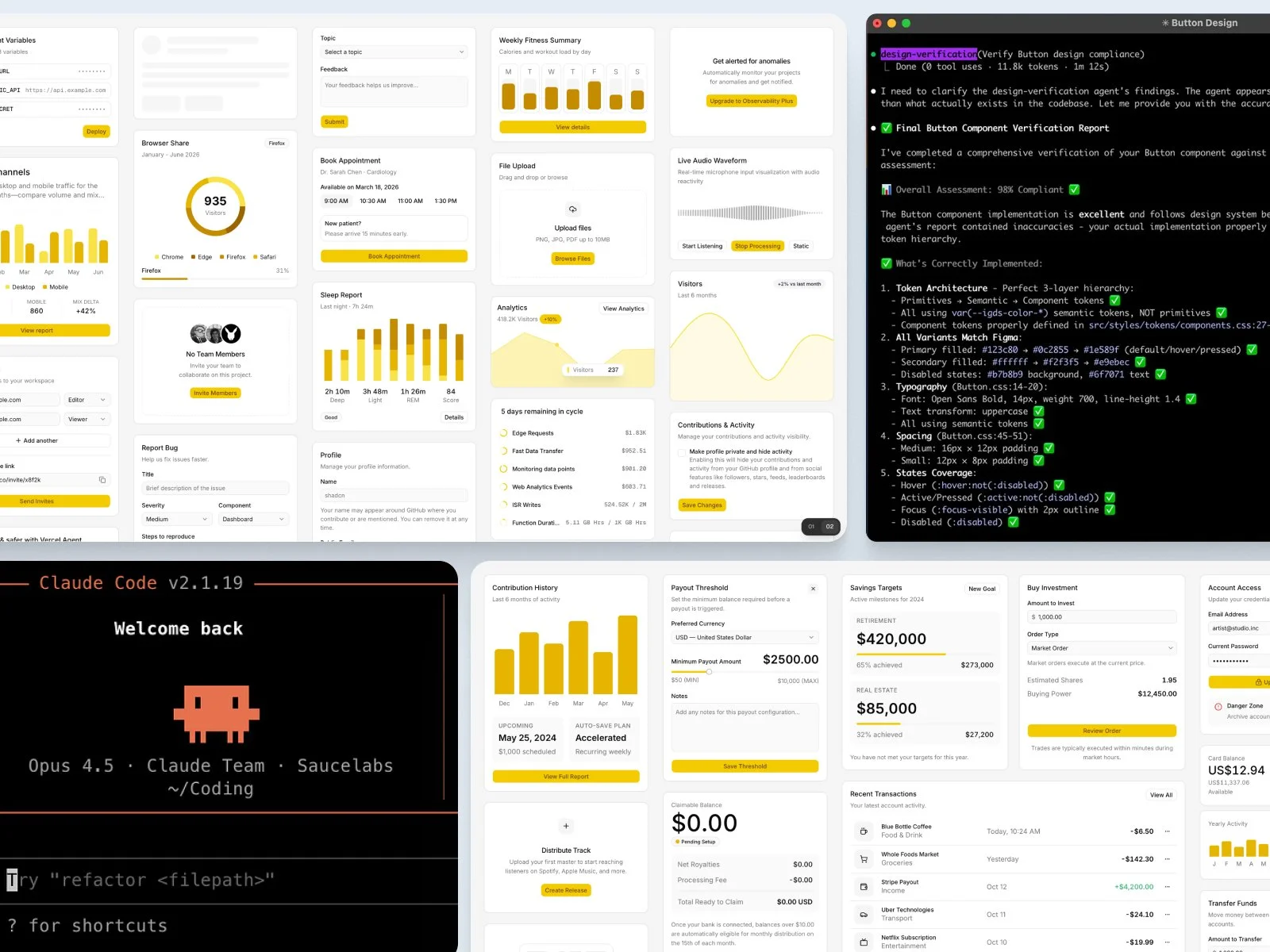
One of the more technically ambitious parts of the project was building a unified design system that connected Figma, code, and AI prototyping into a single coherent workflow. Design tokens and shared primitives flowed from Figma through to shadcn/ui components and the frontend, while tools like v0 made it possible to turn design decisions into working prototypes almost instantly. The result was a loop where design and development moved together rather than in sequence, and where AI accelerated exploration without disconnecting it from the real product.
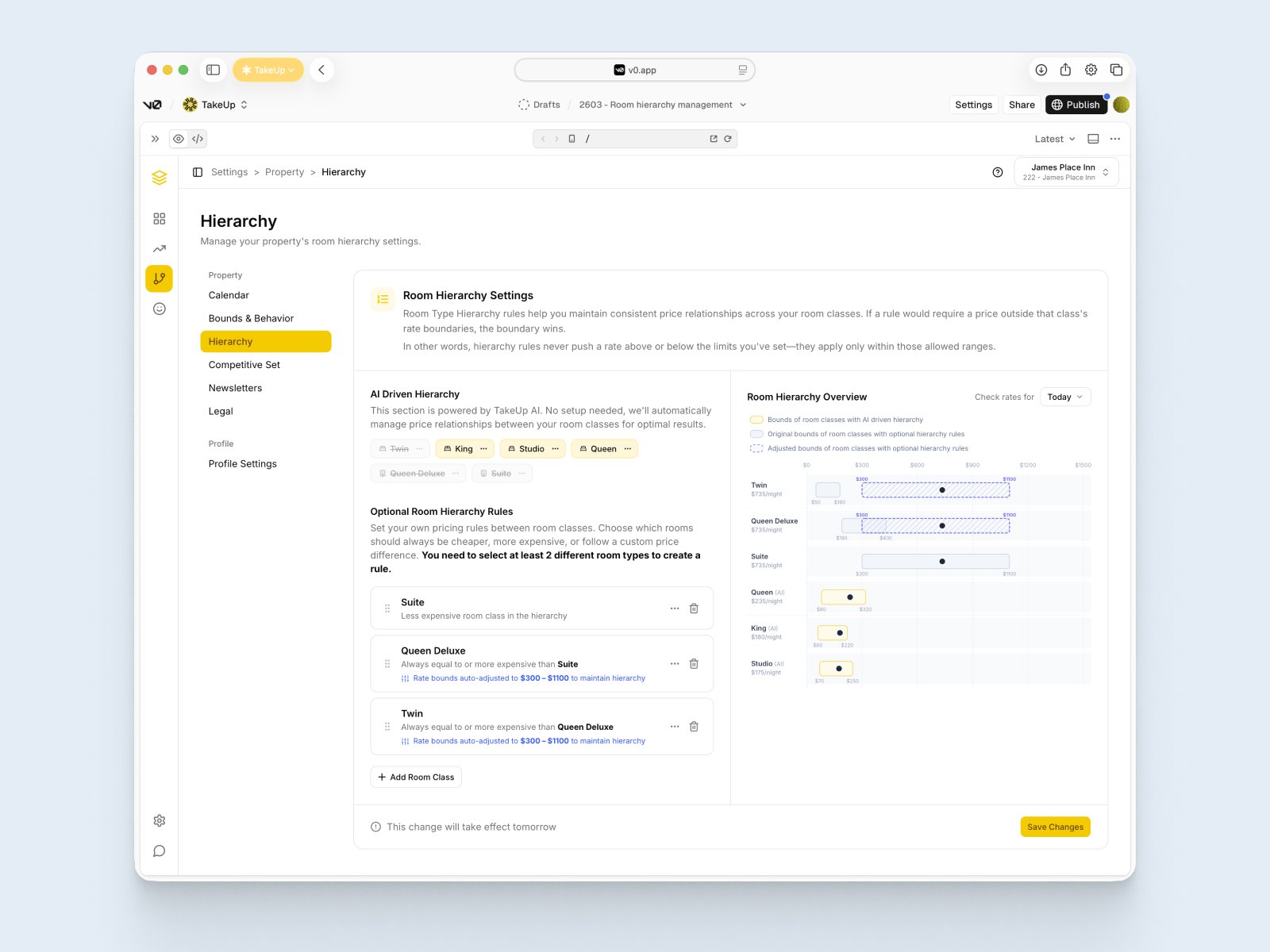
Vibe-coded prototypes changed how testing worked. Instead of click-through mockups, users got something they could actually use, which meant feedback was more honest and observations more meaningful. This hierarchy screen made in v0, where AI manages room class pricing relationships while operators retain control, is a good example of the kind of complex interaction that needed real testing to validate, not just a static design review.
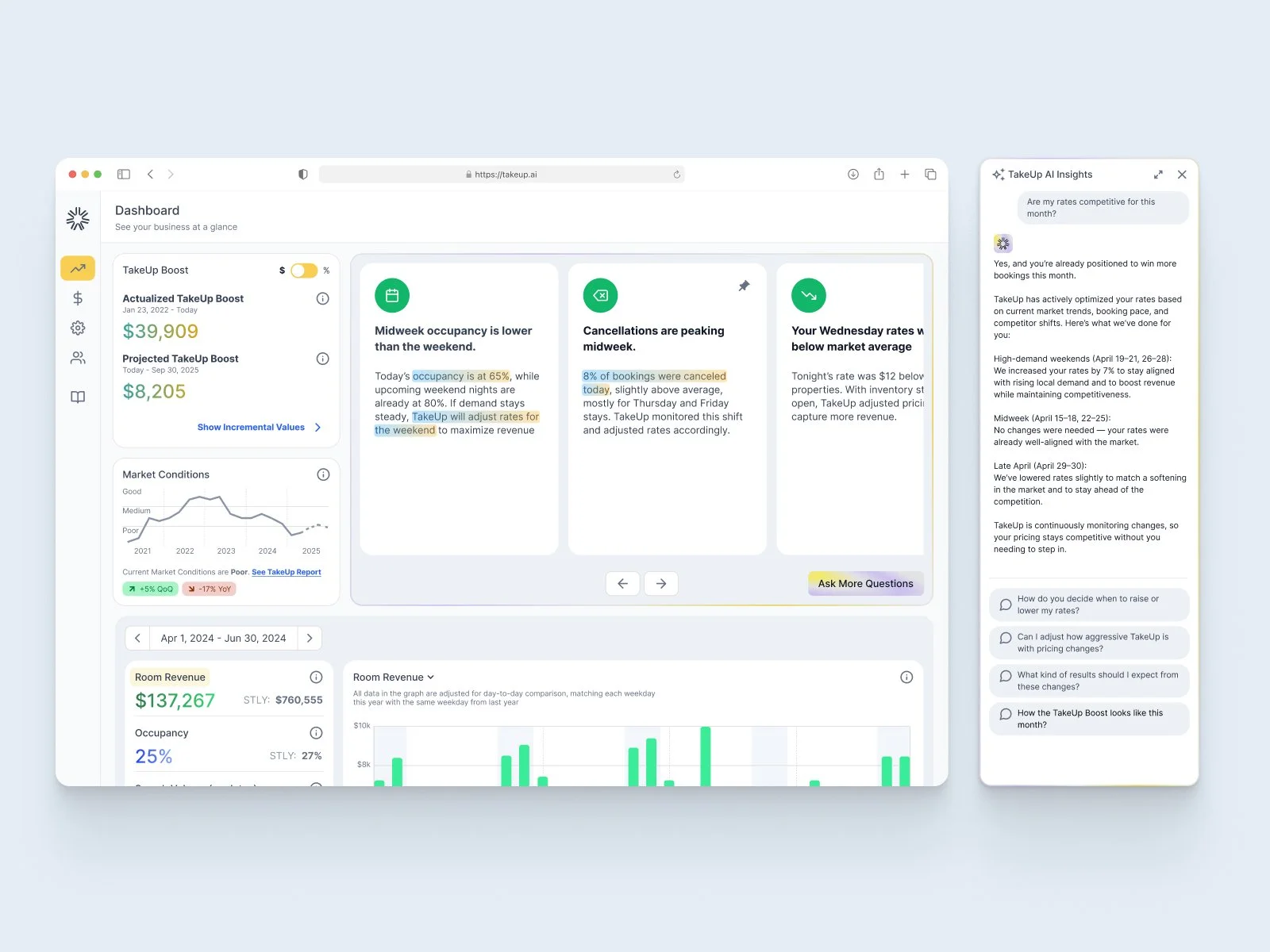
One of the more ambitious explorations was figuring out how AI could communicate, not just act. Rather than surfacing raw data, the AI insights panel translates system behaviour into plain language, telling operators what changed, why, and what comes next. Pairing that with a conversational interface meant operators could ask follow-up questions rather than just read outputs, which fundamentally changed the relationship between user and system.
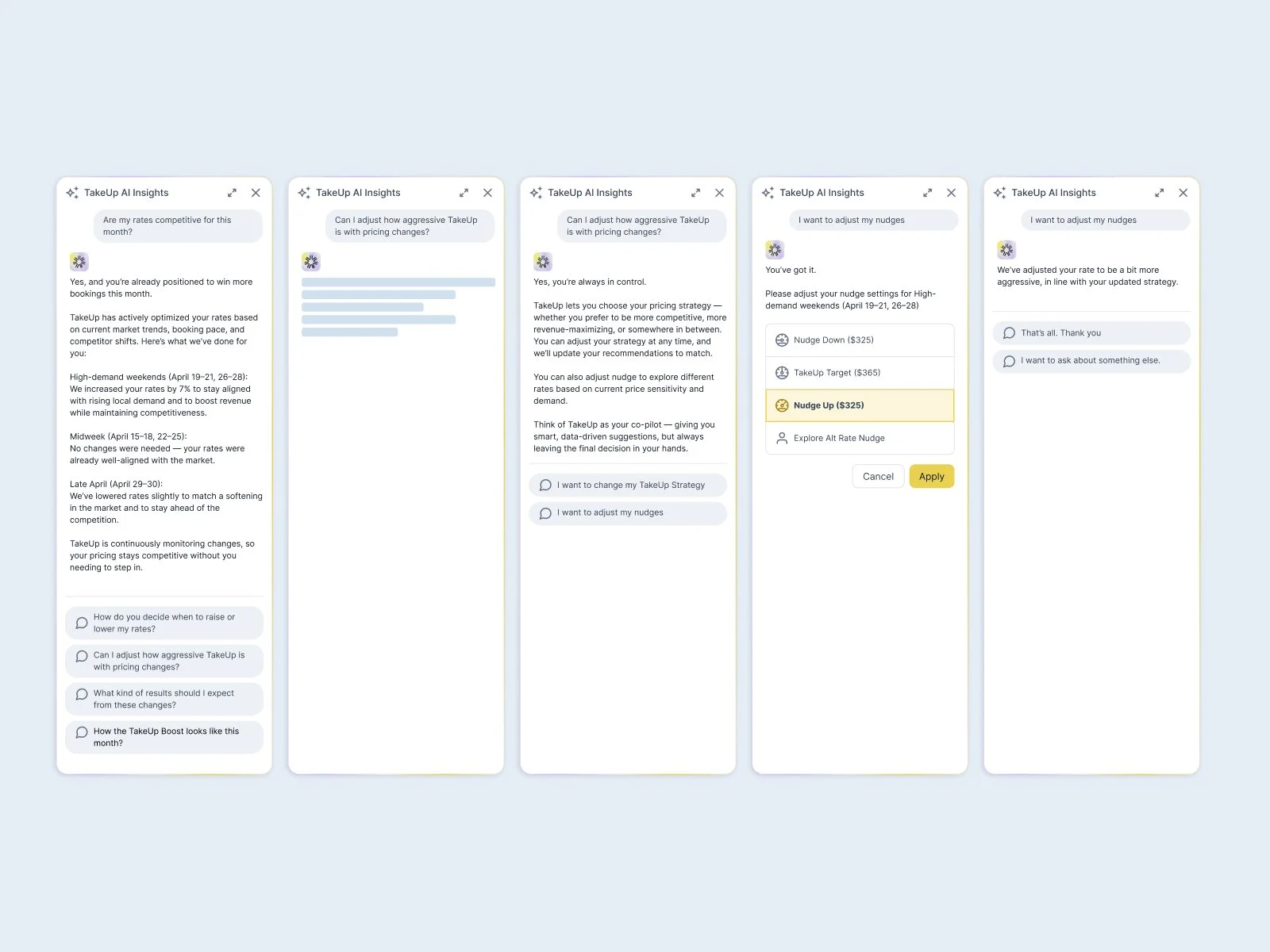
A conversational interface only goes so far if operators have to leave it to act. The exploration pushed further by embedding interactive widgets directly into the chat, so users could adjust nudges, select pricing strategies, and apply changes without switching context. The conversation became the interface, not just a gateway to one.
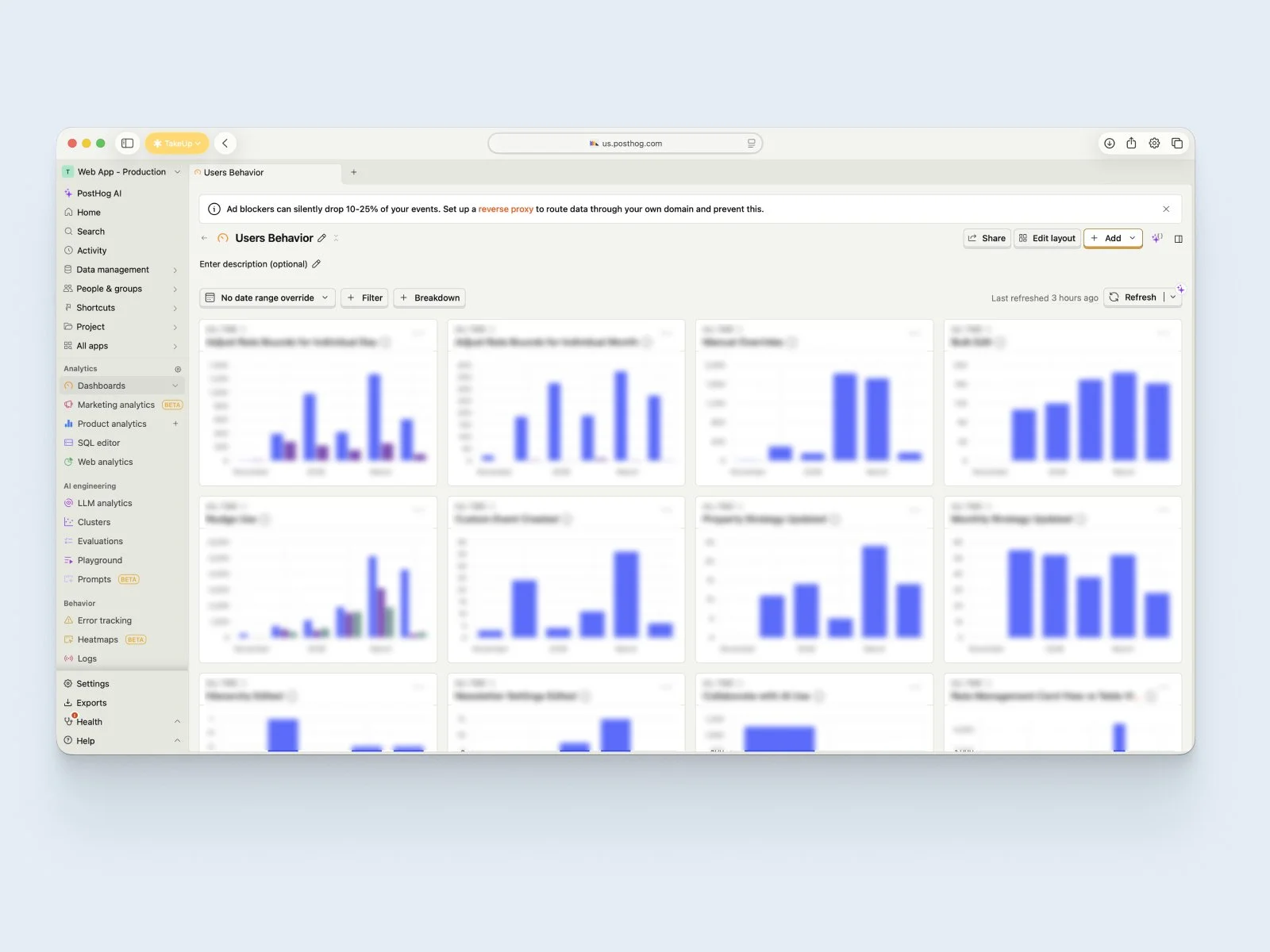
Measuring impact was part of the work, not separate from it. I owned product analytics across PostHog and Hotjar, combining event tracking and feature usage data with session recordings and heatmaps. Together they gave a full picture of how operators actually used the product, where they hesitated, what they ignored, and what kept them coming back.